
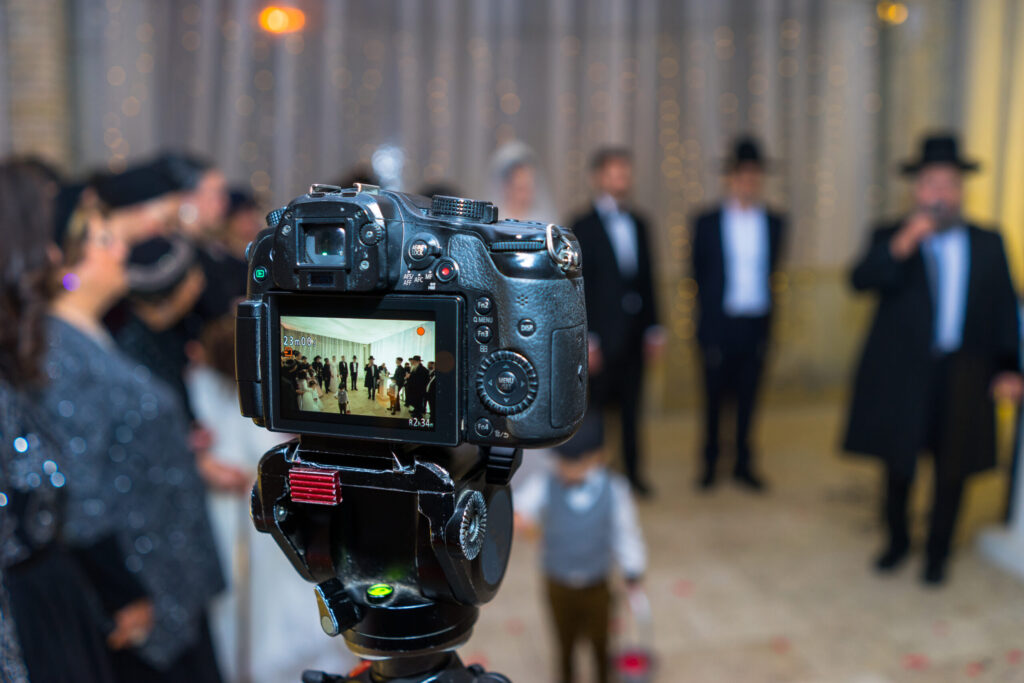
Jewish Wedding
If you’re attending a Jewish wedding, there are many Jewish wedding traditions that you’ll probably see. The customs will differ according to the level of Orthodoxy of the bride & groom. Knowing what traditions you may witness and be a part of will definitely enhance your experience.
KETUBAH SIGNING
The Ketubah, which is a beautiful piece of paper and many times a fairly ornate work of art, is a symbolic marriage contract. It outlines the groom’s responsibilities to his bride. The Ketubah signing ceremony is held right before the actual wedding ceremony.
Immediate family members are present as well as the rabbi or officiant, and it’s signed by two witnesses that are not blood relatives. It’s usually displayed during the wedding ceremony.
Bedeken
This is an intimate setting where the bride and groom meet during the ketubah signing. The groom approaches the bride and covers her face with a veil. This symbolizes that he values the bride for her inner beauty as well as for her other attributes
The Jewish Wedding Processional
The processional order is slightly different in Jewish ceremonies. In the Jewish tradition, the groom’s parents walk him down the aisle to the chuppah, which is the altar where the ceremony begins and the bride and groom exchange vows. The bride and her parents follow. Traditionally, both sets of parents stand with the rabbi along with the bride and groom under the chuppah during the ceremony.
The Chuppah
A Chuppah is a canopy that has four sides and a covered top. It symbolizes the new home that the couple will be building together. This beautiful temporary structure is usually decorated with flowers.
In some Jewish traditions the bride circles around the groom three times and the groom circles around the bride three times symbolizing creating a new family circle that includes the bride’s family and the groom’s family.
Ring Exchange
Wedding rings traditionally are made of gold, silver, or platinum. There are no stones on the wedding ring if you want to stay traditional. In ancient times the ring was considered very important because it was the value placed on it for the bride to the parents of the bride. The value of the ring was by weight, which could be changed because of a stone or stones inside the ring. The rings are initially placed on the left forefinger because the vein from your forefinger goes straight to the heart.
Seven Blessings
The seven blessings are read in Hebrew as well as English. Many times the blessings are read by family members and close friends or they are read by the rabbi. The blessings are about joy and the power of love. They begin with the blessing over the cup of wine and continue with other celebratory words. The seventh blessing finishes with the blessings of peace and joy.
Breaking of the Glass to Conclude the Jewish Wedding Ceremony
The last part of the ceremony is when the groom and sometimes the bride and the groom step on a glass wrapped inside a cloth bag to shatter the glass. This act is symbolic of the fragility of life and the commitment to be there for one another through any. difficulties that life brings.
Mazel Tuv
Once the ceremony has ended and the glass is broken, it’s customary for the guests to cheer “Mazel Tov” This translates to congratulations and also wishing you the best in the future.
Alone Time
When the ceremony concludes, it’s tradition for the bride and groom to spend some time alone together. This gives the couple an opportunity to reflect on their new relationship before celebrating with their friends and relatives.
The Jewish Wedding Reception
The Hora is a must in a Jewish wedding reception. This is an upbeat dance in which the guests dance in a circle. Many times there is an inner circle and an outer circle with each circle going in a clockwise direction. In an orthodox wedding reception women and men have their own individual separate circles.
The bride and groom are seated on chairs and lifted in the air while holding a handkerchief or napkin. The bride and groom’s parents can also be lifted on the chairs if they decide to do that.
Another tradition is the Crowning Ceremony. This is performed when the last child of the mother of the bride and/or groom gets married. The special song that is performed is called the Mezinke. During this song, the band leader explains this tradition, and a crown, usually made of flowers, is placed on the mother’s head. Then the band performs At Azoi or a similarly upbeat song. At that time the relatives and close friends congratulate the mother
The Sid Miller Dance Band has at the pleasure of performing hundreds of Jewish ceremonies and receptions. They are always fun and joyful events that feature lots of food and high-energy dancing.
For more information about the Sid Miller Dance Band Click Here.